
SOAP Notes in Healthcare: A Complete Guide for Clinicians in 2025
SOAP notes are a global language in the field of healthcare documentation. Whether you work as a doctor, nurse, therapist, or counsellor, SOAP notes enable you to clearly and consistently record, monitor, and share patient data. SOAP Notes in Healthcare provide a structured, unambiguous way to document clinical observations and patient data. They enable correct decision-making, provide smooth continuity of treatment, and assist professionals in tracking progress.
They are concerned with maintaining accuracy, consistency, and continuity of care, not just paperwork. We’ll go over the definition of SOAP notes, their structure, examples, and templates for various fields, and how artificial intelligence is transforming documentation in the digital age in this guide.

Table Of Contents
Dissecting SOAP: Subjective , Objective, Assessment , and Plan

SOAP Notes Definition
Healthcare providers can clearly and consistently document, assess, and monitor a patient’s condition and treatment by using SOAP notes, which are structured clinical records that divide patient information into four sections: Subjective, Objective, Assessment, and Plan. Subjective, Objective, Assessment, and Plan (SOAP) are four crucial elements of clinical recording that aid in the logical and effective organisation of patient data.
1. S: Subjective
The patient’s own description of their situation is included in the Subjective section. Pain, worry, and exhaustion are examples of symptoms, emotions, and sensations that are not clearly measurable. This section focuses on the patient’s account rather than the clinician’s observations. For instance, “I feel lightheaded after getting up” or “My back hurts every morning” are examples of statements a patient may make. Subjective information helps direct the remainder of the assessment and offers insightful information about the patient’s perception of their health.
2. O: Objective
Measurable, observable, and information acquired during the clinical interaction are the focus of the Objective portion. Vital signs, test results, lab results, behavioural observations, and physical exam findings are a few examples. The objective element is based on what the doctor observes, hears, or measures, in contrast to the subjective part. For example, “101°F” or “Patient seemed tired and moved slowly.” The data and specifics that back up the diagnosis and treatment plan are presented in this section.
3. A: Assessment
The doctor analyses the information gleaned from the subjective and objective data in the Assessment portion. In essence, it is a summary of the patient’s present condition or a professional assessment. A diagnosis, a list of potential ailments, or progress notes, if it’s a follow-up visit, may be included. As in “Respiratory infection improving with current medication” or “Symptoms consistent with mild depression.” Clinical reasoning, observed data, and the patient’s experience are all connected by the evaluation.
4. P: Plan
Based on the evaluation, the Plan section describes the patient’s care’s next stages. It covers lifestyle advice, prescription drugs, treatment plans, follow-up appointments, and any necessary referrals. This section converts the evaluation into attainable objectives. “Start a low-dose antidepressant, schedule a follow-up in two weeks, and recommend daily exercise,” for instance. A good plan is precise, measurable, and unambiguous, guaranteeing that the patient and the doctor are aware of the next steps in the treatment process.
Templates & Examples for SOAP Notes
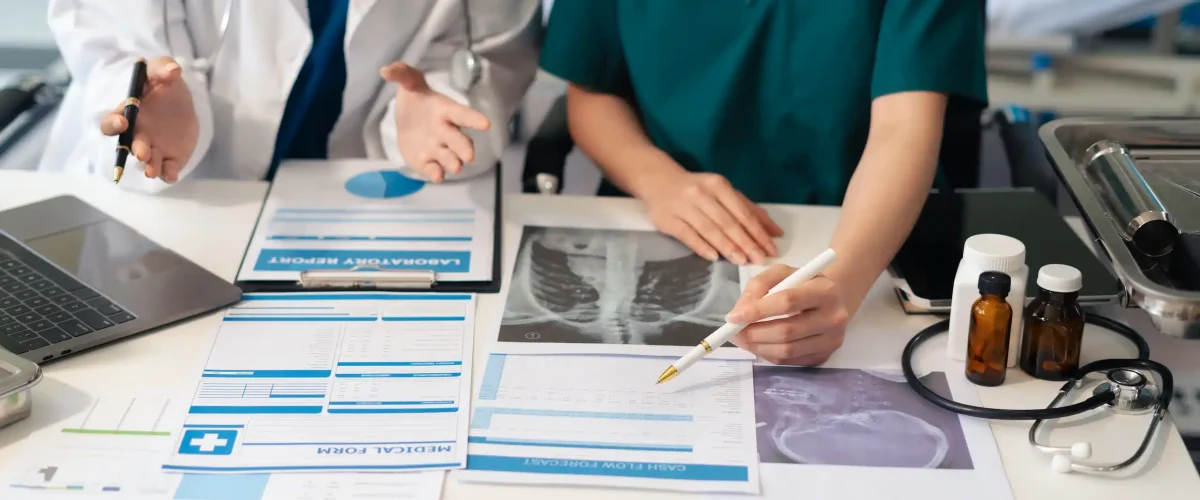
A few examples of how SOAP notes format that might be modified to suit various healthcare environments are as follows:
S: “The patient complains of mild chest pain following meals.”
O: Normal ECG, slight upper abdominal pain.
A: Acid reflux, probably.
P: Begin antacid treatment; go over diet; check in ten days.
Example of a SOAP Note for Counselling and Mental Health
S: “Before social gatherings, I get nervous.”
O: Throughout the session, the patient seemed anxious, avoided making eye contact, and fidgeted.
A: Signs that point to social anxiety.
P: Keep track of anxiety causes, assign relaxation techniques, and continue CBT sessions.
A Sample of a Nursing SOAP Note
S: “Long shifts cause pain in the lower back.”
O: Mobility is limited; pain level is 6/10.
A: Long periods of standing can cause muscle strain.
P: Give prescribed painkillers, use heat therapy, and give posture adjustment instruction.
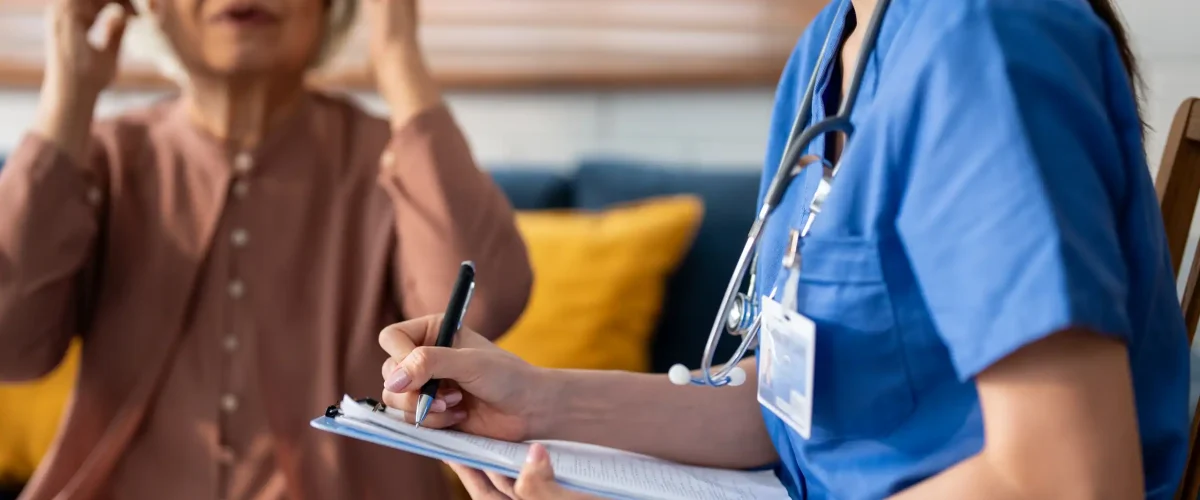
For continuity of care, SOAP notes are essential for nurses. They make sure that everyone on the team, from doctors to shift nurses, has a clear picture of the patient’s condition and the status of their treatment.
The Best Methods for Writing Nursing SOAP Notes:
1. Take the patient’swords:
Provide direct quotes or summaries of the patient’s reports at the start of the Subjective (S) section. This guarantees precision and provides a true representation of their experience, such as “I’ve been experiencing vertigo since yesterday.
2. Maintain Observations Measurable and Objective
Facts, not interpretations, should be recorded in the Objective (O) section. Quantifiable information should be included, such as test results, vital signs, and physical observations like “blood pressure 130/80 mmHg, skin dry and warm.”
3. Incorporate Clinical Reasoning into the Evaluation
Utilize the Assessment section to rationally interpret the data gathered. Draw attention to any alterations, potential diagnoses, or nurse assessments that relate symptoms to the need for treatment.
4. Make the plan understandable and feasible.
Interventions, drugs, patient education, or follow-up actions should all be described in the plan. Any nurse who reads it will know exactly what to do if you are specific.
5. Maintain Documents: Short but comprehensive
Steer clear of lengthy descriptions. Attention should be paid to pertinent information that succinctly and clearly explains the patient’s progress, current state, and nursing interventions.
6. Utilize Nursing Standard Language
Use professional language and recognized medical abbreviations. All members of the healthcare team will find your paperwork easier to comprehend if you use consistent terminology.
7. Maintain Your Neutrality and Objectiveness
Explain actions and facts instead of opinions. Instead of writing “Patient was uncooperative,” for instance, write “Patient refused medication.”
8. Take Notes Immediately
To guarantee accuracy and comprehensiveness, document as soon as feasible following patient contacts. Real-time notes help you remember important details.
9. Adhere to ethical and legal standards
Keep information private and follow your facility’s documentation guidelines. Safeguard patient data and guarantee adherence to applicable privacy laws, such as HIPAA.
10. Examine before deciding
Make sure your notes are accurate, clear, and grammatically correct every time. Reviewing your documentation quickly guarantees that it is error-free and professional.
SOAP Notes for Mental Health
Therapists and counsellors can measure results, track progress, and stay in compliance with legal and insurance requirements by using SOAP notes in behavioural health and counselling.

Important Things to Know for Behavioural Health SOAP Notes:
Pay attention to your feelings, actions, and coping techniques.
In the “Objective” part, steer clear of subjective interpretation.
Clearly state your therapy objectives and plans.
As an example:
S: “I can’t sleep because I keep telling myself about stressful things.”
O: The patient seemed worn out; coping mechanisms from the previous session were explored.
A: Moderate progress on relaxation exercises; ongoing anxiety affecting sleep.
P: Review sleep hygiene, introduce mindfulness practices, and conduct a follow-up after a week. Read a detailed article on SOAP Notes in Behavioral Health
SOAP Notes: AI and Digital Transformation
Clinicians’ methods of recording patient data are evolving; AI-powered SOAP notes are making the process quicker, more intelligent, and more effective.
1. SOAP Notes that are automated
To help physicians, AI systems now automatically create SOAP notes from dictation or session recordings. This minimizes errors, cuts down on manual labor, and saves time.
2. SOAP Notes for Voice-to-Text
Providers can talk freely during or after sessions thanks to voice recognition technology, which then translates speech into structured SOAP notes that are formatted, categorized, and prepared for review.
3. The software Smart SOAP Notes
AI medical documentation technologies are integrated into modern platforms to identify clinical words, identify discrepancies, and guarantee adherence to healthcare standards. Some even sync with EMRs/EHRs directly to ensure a smooth workflow.
AI's advantages in SOAP notes

1. It saves clinicians’ time.
Clinicians spend a lot less time documenting when using AI-powered SOAP note systems. After every session, providers can employ automated transcription tools or voice-to-text software that rapidly converts speech into an organized SOAP note format, eliminating the need to manually type extensive notes. Clinicians can devote more of their weekly hours to patient care rather than administrative duties as a result. The increased efficiency lowers burnout among healthcare workers while also increasing productivity.
2. Enhances precision and reliability:
Medical records are more accurate and consistent when AI tools are used. Human errors, including incomplete entries, incorrect terminology, and missing details, are reduced. With capabilities like structured templates, autosuggestions, and real-time data validation, artificial intelligence (AI) makes sure that SOAP notes stay standardized, understandable, and in line with clinical best practices. Because of this increased accuracy, notes are more beneficial for both present and future treatment.
3. Guarantees security and compliance:
To maintain patient anonymity, modern AI SOAP note systems are constructed with stringent data protection standards. They provide secure storage, safe data transmission, and controlled access in accordance with laws like HIPAA and GDPR. Additionally, automated logs and audit trails support accountability and openness. This makes sure that even though automation increases productivity, it never jeopardizes the legal or ethical obligations associated with medical reporting.
4. Improves patient care with insights in real time.
AI analyses data rather than merely recording it. Using historical data, sophisticated systems can spot trends, monitor advancement, and identify possible dangers. The AI can, for example, alert a patient for early care if their symptoms worsen. Clinicians can make well-informed decisions more rapidly because of these real-time insights, which result in more individualized and successful treatment programs. Ultimately, more intelligent SOAP notes result in more intelligent patient care.
5. Make use of clinical judgment while evaluating
Your nursing knowledge should be evident in the Assessment (A) section. Provide a summary of the findings that are consistent with mild dehydration based on both individual and objective data. This links professional reasoning to the evidence.
6. Establish a lucid, workable plan
Assign the following actions under Plan (P). Add patient education, medication updates, interventions, and follow-up activities. “Promote oral fluids, track intake and output, and reevaluate hydration status in two hours,” for instance.
7. Be Brief and Pertinent
Stay away from lengthy stories or extraneous details. For another clinician to comprehend the issue and carry on with care without any problems, each note should include the most crucial details from that session.
The Prospects of SOAP Notes
AI and intelligent documentation will revolutionize how professionals compose and handle SOAP notes as the healthcare industry continues to digitize. Enhancing human insight rather than replacing it is the aim, freeing up physicians to concentrate more on patient care and less on paperwork.
More sophisticated systems that evaluate patient data, recommend therapies, and expedite whole clinical workflows are anticipated in the upcoming years, all the while maintaining accurate, patient-centred, and compliant documentation.
Conclusion:
SOAP notes continue to be the foundation of efficient clinical documentation in 2025 as healthcare continues to change, providing organization, clarity, and continuity of care. However, the advent of digital and AI-driven SOAP note systems has given doctors the means to record more quickly, accurately, and insightfully. In addition to lowering administrative workloads, these technologies free up caregivers to concentrate more on what really counts: patient relationships and high-quality care. Automated or handwritten, the goal of SOAP notes is always the same: to document each patient’s story in a way that promotes more intelligent, compassionate healthcare.